1Q 2026 Industrial Property Market: Growth Moderates but Fundamentals Remain Resilient
- Source
- ERA Singapore
- Published
- 25 May 2026
- Category
- Research

Economic Overview
Singapore’s economy expanded 4.6% year-on-year (y-o-y) in 1Q 2026, supported by stronger-than-expected activity despite external trade uncertainties. In February, the Ministry of Trade and Industry (MTI) had earlier upgraded Singapore’s GDP growth forecast from “1.0% to 3.0%” to “2.0% to 4.0%” for the whole of 2026.
The 4.6% growth moderated from the 5.7% gain recorded in the previous quarter. Growth momentum may become more measured as global uncertainties, geopolitical tensions and a potential oil price shock weigh on business sentiment. In particular, the ongoing US-Iran conflict could dampen economic activity in the coming quarters, especially if it leads to higher energy costs or disrupts global trade flows. Hence, MTI’s GDP growth projections for this year may be adjusted.
While the macroeconomic outlook remains uncertain, interest rates are expected to remain relatively stable in 2026. This should provide some support to business confidence, as companies gain greater clarity over financing costs. The Purchasing Manager Index (PMI) has hovered between 50.5 and 50.6 from January to March 2026. This is an increase compared to the readings of 50.0 and 50.3 for the last three months of 2025, which could indicate a potential rebound. Other key economic indicators such as the Non-Oil Domestic Exports (NODX) and manufacturing output have remained fairly stable.
Chart 1: Singapore GDP y-o-y growth in chained dollar
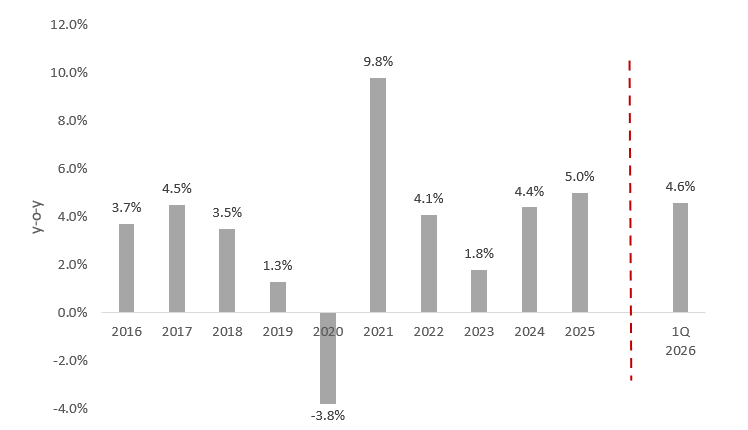
Chart 2: Non-Oil Domestic Exports and Manufacturing Exports
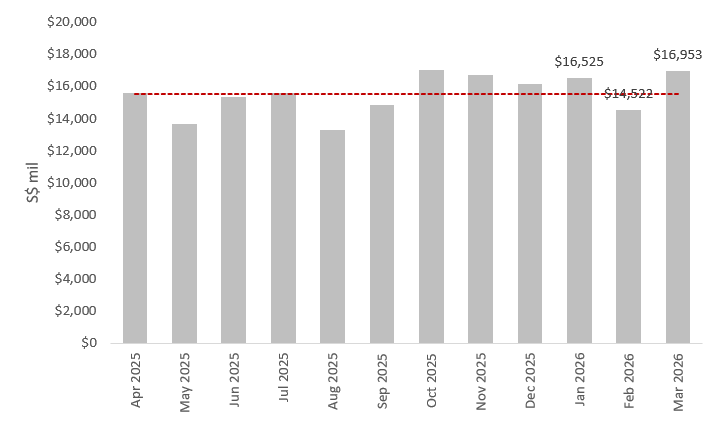
Chart 3: Index of Industrial Production y-o-y Change
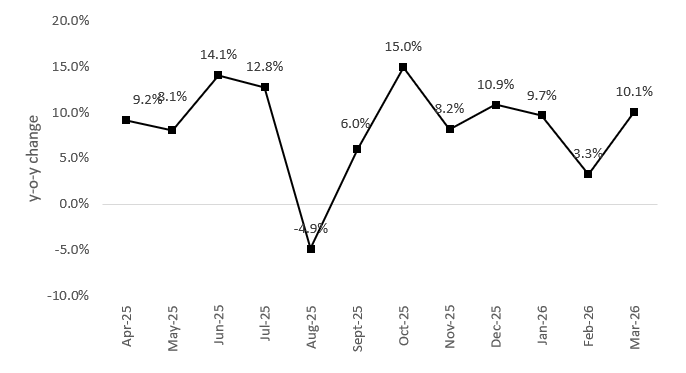
Chart 4: Purchasing Manager Index
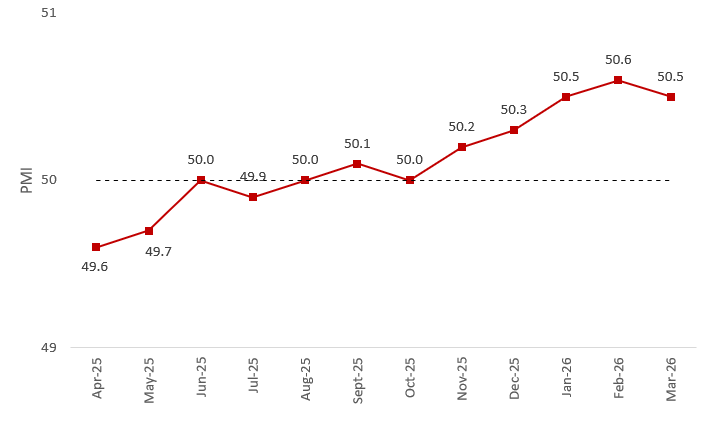
*The PMI reading with a score above 50 indicates that the manufacturing economy is generally expanding and that the economy is generally declining when the reading falls below 50, and a score of 50 indicates no change from the previous month.
Price and Sales Transaction Volume
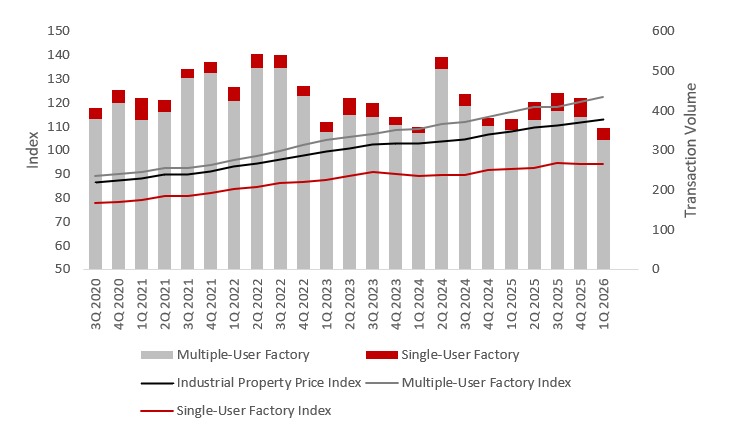
Overall, the Industrial Property Price Index grew by 1.2% q-o-q in 1Q 2026. The uptick was modest, easing slightly from the 1.4% growth recorded in 4Q 2025. However, this still marked the eighth consecutive quarter of growth in prices, with the index now at an all-time high.
This price increase was largely led by multiple-user factories with an increase of 1.7 % q-o-q, while single-user factories price index dipped by 0.1% q-o-q. In the previous quarter, the price index multiple-use factories rose by 1.9% while single-user factories saw a slight decrease of 0.3%.
Meanwhile, multiple-user factory transaction volume declined by 14.8% q-o-q, extending the 3.8% decrease in the previous quarter. Single-user factory transactions decreased by 40.4% to 28 transactions, reversing from the 4.4% increase in 4Q 2025.
Chart 5: Price Index and Transaction Volume
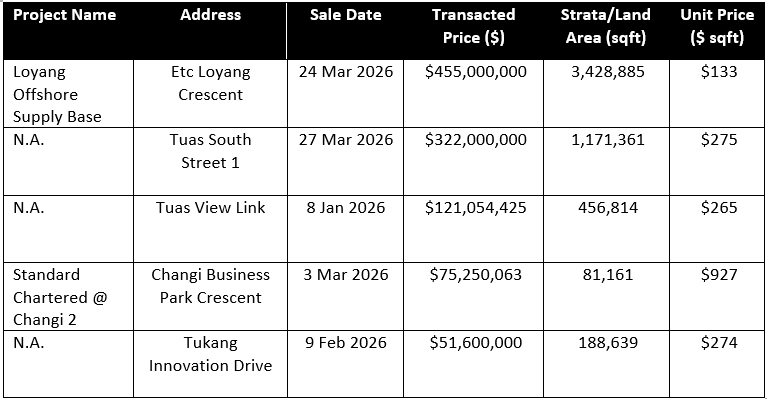
The largest deal in 1Q 2026 involved the sale of Loyang Offshore Supply Base, a 3.4 million sq ft facility supporting the marine and oil and gas industries, for $455 million ($133 psf) in March 2026, reportedly to CapitaLand Ascendas REIT (CLAR). This was followed by the sale of four single-storey warehouses at Tuas South Street 1 to StarNova Capital for $322 million ($275 psf).
Other notable transactions included a 456,814 sq ft industrial property at Tuas View Link, which was sold for $121.1 million ($265 psf), as well as Standard Chartered @ Changi 2 at Changi Business Park Crescent, which changed hands for $75.3 million ($927 psf). A property at Tukang Innovation Drive was also transacted for $51.6 million ($274 psf).
These sizeable transactions suggest that investors remain interested in industrial assets across sectors such as logistics, warehousing and specialised industrial facilities.
Table 1: Top Five Sales Transactions in 1Q 2026, based on caveats lodged
In the Industrial Government Land Sales (IGLS) space, JTC awarded two industrial sites in 1Q 2026, with three and five bidders respectively.
Table 2: IGLS sites awarded in 1Q 2026

Leasing and Leasing Volume
All Industrial rental index continued to trend upward, rising for the 22nd consecutive quarter in 1Q 2026. Rents grew by a further 0.4% q-o-q, moderating from the 0.5% increase in 4Q 2025, signalling a shift towards more measured growth.
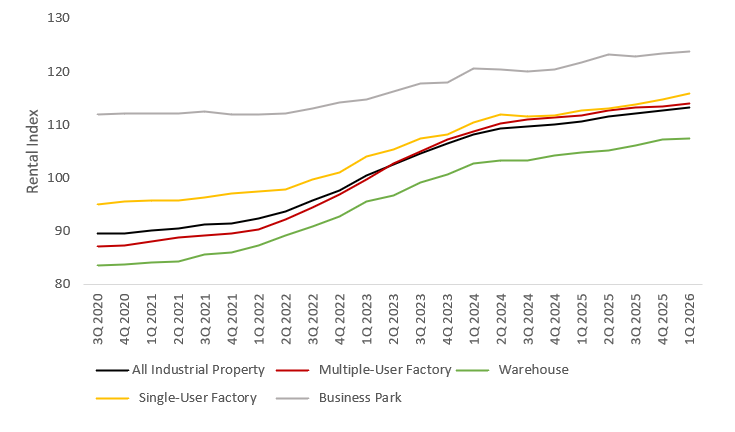
In particular, single-user factory rents grew the fastest this quarter, rising 1.0% q-o-q. Multi-user factory rents followed with 0.5% q-o-q growth, reflective of stable take-up from manufacturing and owner occupiers. Meanwhile, business park rents increased slightly by 0.3% q-o-q, maintaining its measured growth from the 0.4% q-o-q gain in 4Q 2025.
Warehouse saw the smallest increase of 0.2%, easing in momentum from the 1.1% q-o-q growth last quarter, suggesting a more measured momentum.
Chart 6: Rental Index for All industrial properties
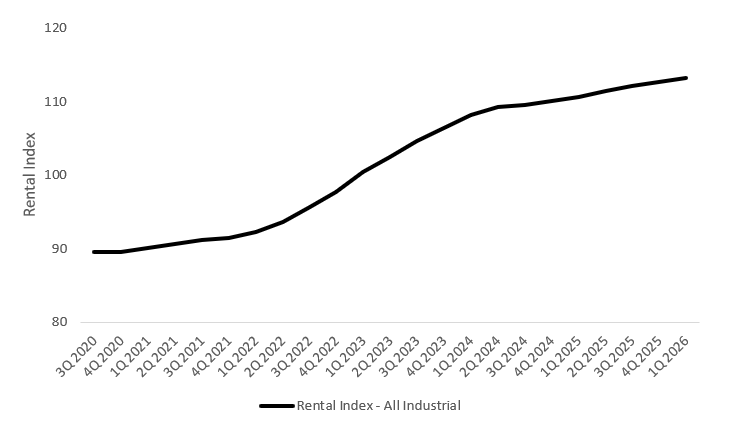
Chart 7: Rental Index By Property Type
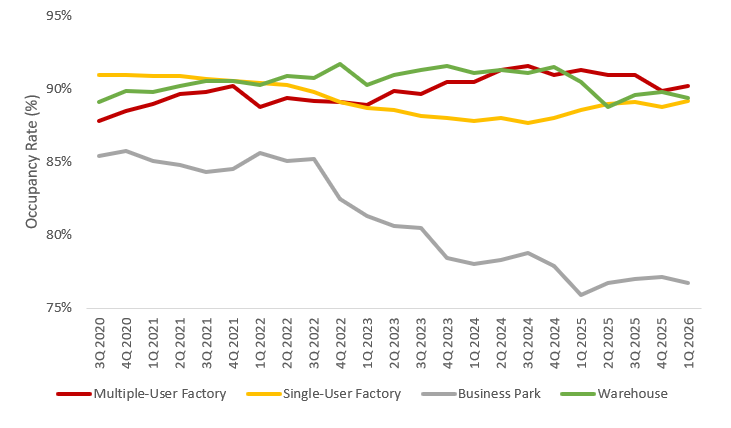
Occupancies across the industrial market remained stable in 1Q 2026, rising marginally from 88.7% in the previous quarter to 88.9% in this quarter. This reflects healthy absorption supported by steady take-up of the new supply completed during the period. The ongoing supply pipeline has helped ease occupancy pressures amid broader global economic uncertainties.
Among the segments, single-user occupancy recorded the strongest gain of 0.4 percentage points (ppts), aligning with the strong rental performance this quarter. Multiple-user factory also saw a modest 0.3 ppts increase, indicating that vacancy challenges may be easing as more tenants take up space. Meanwhile, occupancy rate for business park and warehouses dipped slightly by 0.4 ppts, reflecting steady and measured occupier demand.
The overall stability in occupancy rates demonstrates that industrial space demand remains intact. This suggests that tenants are maintaining the size of their occupied space rather than downsizing, likely due to ongoing manufacturing activity, supply chain diversification, and Singapore’s reliability as and global manufacturing hub. The balanced supply pipeline and steady tenant demand helps support stable and resilient rental growth as the market moves into 2H 2026.
Chart 8: Industrial Properties Occupancy Rates
Upcoming Supply
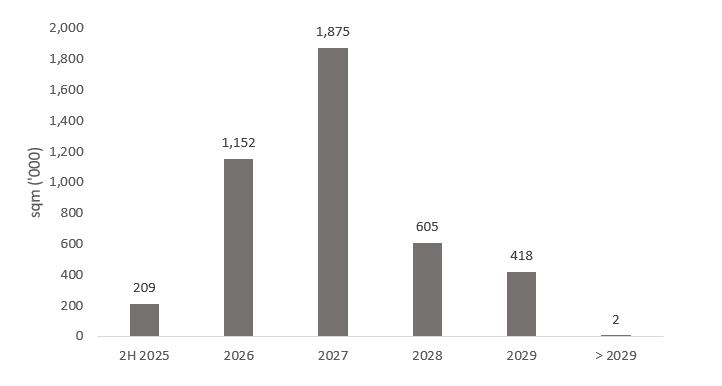
2026 saw the completion of 13 developments, totalling 246,920 sqm. Notable developments include Stellar @ Tampines at 12 Tampines North Drive 4 (50,760 sqm) and a warehouse development at 8 Jalan Besut (47,490 sqm).
Looking ahead into the remaining nine months of 2026, another 40 new industrial developments are slated for completion, injecting 498,140 sqm of industrial space into the market. Notable developments include Gain City Megastore @ Tampines (25,110 sqm) and a single-user industrial development at Pasir Ris Industrial Drive 1 (37,640 sqm)
This slew of completions could cater to the demand for industrial spaces. Since some of these leases have already been pre-committed, no major impact on occupancy rate is expected.
Chart 9: Supply of Industrial Spaces' Expected Completion Year
In conclusion
Singapore’s industrial property market remained resilient in 1Q 2026, supported by steady occupier demand and a relatively stable economy and manufacturing sector. Singapore’s economic growth moderated from the previous quarter and key manufacturing indicators remained broadly supportive, suggesting that industrial activity continued to hold up despite global uncertainties.
Looking ahead, Singapore’s GDP growth is expected to be more measured as global uncertainties, geopolitical tensions and potential oil prices pressure weigh on business sentiment. Businesses and manufacturers may adopt a more cautious approach to expansion, particularly if trade frictions or supply chain disruptions intensify.
Nonetheless, Singapore’s reliability as a trade hub as well as steady growth of the manufacturing sector should continue to support occupier demand, particularly from companies seeking operational stability and supply chain resilience.
Overall, industrial prices, rents and occupancy rates are likely to remain supported, although companies are expected to remain cautious about expanding their occupied space. Well-located and modern industrial buildings are expected to continue attracting interest from SMEs, owner-occupiers and investors seeking efficient operational space or better yield opportunities.